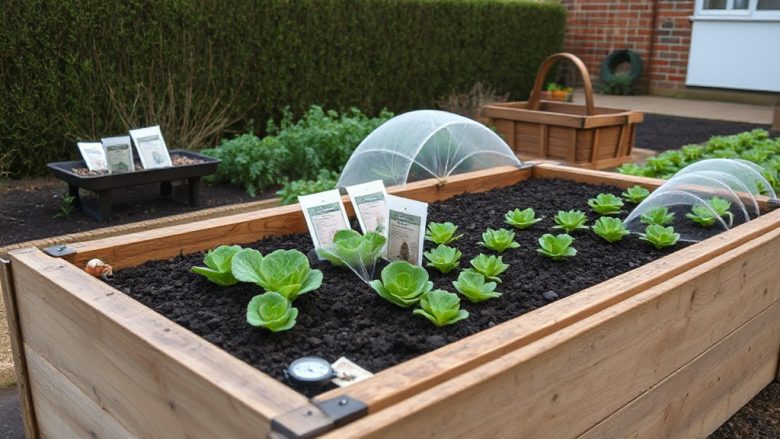
The honest answer to when to plant vegetables in the UK is that it depends on your last frost date, not the calendar month. Find that date for your patch first and the rest of the year falls into place. Most of lowland England sits somewhere around late April to mid May, coastal Wales and the south west a touch earlier, and much of Scotland, the Pennines and upland Wales up to three or four weeks later. Once you know when frost usually stops in your area, every sowing window makes sense.
If you’re working a raised bed or a row of pots, this matters even more than it does for a field grower. Pots freeze faster, raised beds warm faster, and a cold snap in May can wipe out a tray of tender seedlings in one night. So the plan below is built around frost dates and soil temperature rather than a rigid calendar. Treat it as a shape for the year, then adjust for your postcode.
How to Work Out Your Own Sowing Windows
Before you sow anything, do two small jobs. First, look up the average last frost date for your nearest town. Garden centres, the Met Office and most seed packets use regional figures, and they’re close enough to plan around. Second, buy a cheap soil thermometer. Soil temperature tells you more than air temperature in spring, because seeds germinate in the ground, not in the air above it.
As a rough guide, hardy crops such as broad beans, peas, spinach and lettuce will germinate once soil holds around 5 to 7°C. Half-hardy crops like carrots, beetroot and onions want 7 to 10°C. Tender crops, including courgettes, sweetcorn, French beans and tomatoes, need 12°C or more, and they sulk badly in cold, wet soil. If you sow tender seed into ground that’s still cold, it often rots before it sprouts. That single fact explains most failed early sowings.
There’s a second date to know: your first autumn frost. In most of the UK that lands somewhere between mid October and late November, earlier in the north and in frost pockets. Anything that needs a long season, such as winter squash, maincrop onions from seed or late brassicas, has to be counted backwards from that date. If a crop needs 100 days and your first frost is in mid October, sowing in early July is already too late.
Early Season: February to April
This is the stretch where indoor sowing earns its keep. Light levels are still low and the ground is cold, but a windowsill, a cool porch or an unheated greenhouse gives you a head start on anything that needs a long season. The trick is not to start too early. A tomato sown in February becomes a leggy, pale plant by April, and it will never catch up with one sown in late March.
February is for the slow, hardy and patient. Onions from seed, leeks, early brassicas such as cabbage and cauliflower, and the first broad beans under cover all work now. If you have a greenhouse or a cold frame, you can also start hardy salads. Outdoors, direct sowing is limited to ground that’s workable, which in most years means light soils in the south and west, and not much else.
March opens the season properly. Direct sow broad beans, early peas, spinach, radish and hardy salad leaves wherever the soil has dried enough to rake. Indoors, start tomatoes, peppers, aubergines and celery if you have steady warmth, and sow your first successional lettuce. Chit early potatoes in a cool, light room so they sprout before planting out in late March or early April.
April is the busiest sowing month of the year. Direct sow carrots, beetroot, parsnips, turnips, chard, spring onions and maincrop peas. Plant out your chitted potatoes once the soil has warmed and the risk of a hard frost has passed in your area. Indoors, sow courgettes, cucumbers, pumpkins and sweetcorn towards the end of the month, not the start. Sweetcorn in particular hates cold roots, so wait until the soil is genuinely warm before it goes out.
A note on protection. Cloches, fleece and cold frames are worth the money in this window. A single layer of fleece can buy you two or three degrees and two or three weeks. If you’re growing in pots, bring them in at night through April. It’s tedious, but it saves the plants.
Mid Season: May to July
May is the month where the UK stops guessing and starts growing. Once your last frost date has passed, tender crops can go out and direct sowing opens up across the board. This is when you sow French beans, runner beans, sweetcorn, courgettes and squash directly into their final positions. It’s also when you plant out tomatoes, peppers and aubergines into beds, pots or grow bags, ideally after a week of hardening off.
Hardening off is the step most new growers skip, and it costs them plants. Move seedlings outside for a few hours a day, starting in shade and shelter, building up over seven to ten days. A plant that goes straight from a warm windowsill to a windy bed will stall for a fortnight, and sometimes just gives up.
June is for succession. Every two or three weeks, sow another short row of lettuce, radish, spinach and beetroot so you’re not harvesting everything in one frantic week. Sow purple sprouting broccoli, winter cabbage and kale now for crops that will stand through the cold. This is also the last sensible moment for a lot of tender crops. A courgette sown in late June will still crop, but a pumpkin sown then almost certainly won’t ripen before the frost.
July is the month for the winter plan. Sow Florence fennel, winter radish, pak choi and the last of the French beans. Plant out leeks for winter and spring use. If you want carrots through the cold months, sow a late row now under fleece. Keep watering steady, because uneven moisture splits carrots and turns cucumbers bitter. It’s also worth sowing a green manure on any bed you’ve cleared, rather than leaving bare soil to wash out over winter.
Late Season: August to October and Beyond
By August, the sowing list narrows to fast, hardy crops and anything that will overwinter. Sow winter salad leaves, land cress, corn salad and rocket for cutting through autumn and mild spells in winter. Plant out spring cabbage and overwintering onions. If you have a greenhouse or a polytunnel, August is a good moment to sow winter lettuce and herbs for indoor cropping.
September is about garlic and overwintering. Plant garlic cloves and overwintering broad beans now, in ground that drains well, so they establish roots before the cold sets in. Sow hardy salad under cover. Lift and store maincrop potatoes, onions and squash once they’re properly matured, because a wet October will ruin them in the ground.
October is the last realistic outdoor sowing month for most of the UK, and even then it’s mostly garlic, broad beans and hardy salad under protection. Anything else is better left until spring. From November through January, the ground is either too cold or too wet for reliable germination, and seed sown then tends to sit and rot. Use the quiet months to plan next year’s rotation, order seed and improve the soil with compost rather than trying to force a crop.
One useful habit through the whole year: write down what you sowed and when, and what actually came up. After two seasons you’ll have a sowing calendar tuned to your own garden, which beats any generic table. Frost dates shift, microclimates differ, and a bed against a south-facing wall will always run a week or two ahead of one at the bottom of the plot.
Frequently Asked Questions
What is the earliest month I can start sowing vegetables outdoors in the UK?
For most of the country, March is the first realistic outdoor sowing month, and only for hardy crops such as broad beans, peas, spinach and radish. In mild coastal and south-western areas you can sometimes sow in late February if the soil is workable. Tender crops should wait until May, once frost has passed.
Can I plant vegetables in April if frost is still forecast?
Yes, but only hardy ones, and with protection. April is a good month for carrots, beetroot, parsnips, chard and peas. Keep fleece or cloches handy for cold nights, and hold back tender crops like courgettes, beans and sweetcorn until the frost risk has genuinely gone in your area.
Which vegetables should I start indoors rather than direct sow?
Start tomatoes, peppers, aubergines, cucumbers, courgettes, squash, sweetcorn, celery and brassicas indoors or under cover. These either need a long season, hate cold soil, or are vulnerable to slugs and pigeons as seedlings. Roots such as carrots, parsnips and beetroot are almost always better direct sown, because they dislike being moved.
How late can I sow vegetables in the UK?
September is the practical cut-off for most outdoor sowing, limited to garlic, overwintering broad beans and hardy salad under cover. October can still work for garlic in mild areas. After that, germination is unreliable and seed tends to rot, so it’s better to wait for spring.