Most of the work in a garden was decided long before anyone picked up a trowel. The hedge that needs cutting four times a year, the lawn that sulks in shade, the border that turns into a weed nursery by July — none of that is bad luck. It is design. If you want to know how to design a low maintenance garden, start by walking the plot and naming the three jobs you resent most. Write them down. Those three jobs are your brief, and everything that follows is about designing them out rather than working harder to keep up.
The goal here is a garden that looks intentional with roughly an hour of work a fortnight, plus a few bigger sessions across the year. That is achievable for most plots, including small courtyards and gardens where bending and kneeling are difficult. It just takes honest decisions early instead of hopeful ones.
Identify What Actually Creates the Upkeep
Maintenance usually comes from five sources: fast-growing plants, bare soil, a lawn in the wrong place, messy boundaries, and hard surfaces that stain or shift. Almost every tiring garden has at least three of these running at once.
Fast growers are the biggest offender. A plant that gains a metre a year needs pruning every year. Multiply that by twenty shrubs and you have a weekend gone. Bare soil is the second: every patch of exposed earth is an invitation for weed seeds, and you will be hoeing it from March to September. Lawns are only high maintenance when they sit in deep shade, on a slope, or against a wall where the mower cannot reach. Boundaries — hedges, rickety fences, overhanging branches — quietly add hours. And cheap paving, gravel without a membrane, or decking in damp shade will need cleaning, topping up or replacing far sooner than you expect.
Walk your garden at three points in the year before you change anything: early spring, midsummer and late autumn. Note where the weeds appear, where the ground stays wet, where plants flop, and which corners you avoid because they are awkward to reach. That map of trouble spots is more useful than any plant list.
Redesign the Hard Landscaping First
Hard landscaping is the skeleton of a low maintenance garden, and it is worth spending the bulk of the budget here. Get it right and the planting becomes almost self-managing.
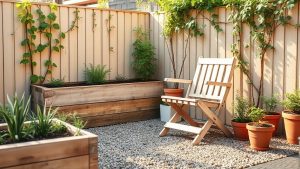
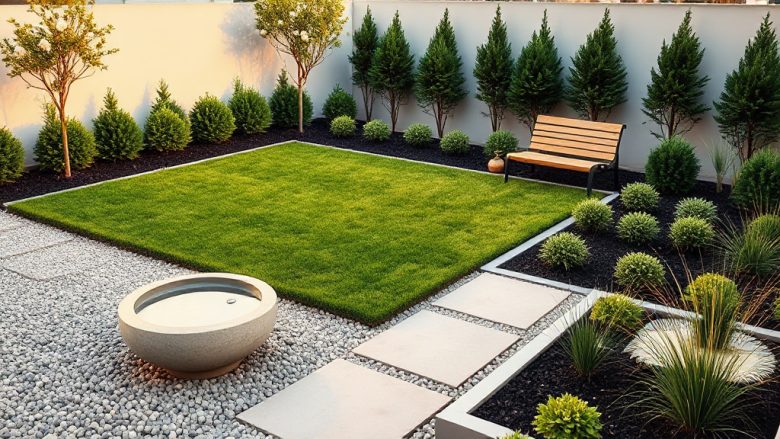
Choose surfaces that age well and need little attention. Smooth paving with tight joints, set on a proper sub-base, will outlast most of us. If you want gravel, use a decent depth over a woven membrane so weeds cannot root through from below, and pick a rounded, larger grade that does not scatter into the house. Avoid patterns that need constant sweeping, and avoid loose bark mulch on paths, which migrates and decomposes.
Make edges do the work. A steel or stone edge between border and path means you can strim or mow right up to the line without trimming by hand. On a small plot, cutting the lawn down to a simple shape — a rectangle, an L, a single curve — saves minutes every single cut because there are fewer corners to navigate.
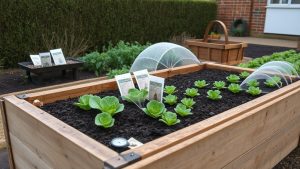
Think about access as well as appearance. Wide paths, gentle steps and level thresholds make the garden easier to work in if mobility changes. Raised beds at roughly waist height reduce bending, and a tap or water point near the beds saves hauling a can around the plot. These are practical choices, not compromises.
Finally, deal with drainage. Water that pools at a low corner will kill plants, encourage moss and turn paths green. A simple French drain or a planted soakaway solves it once, rather than every winter.
Choose Plants That Look After Themselves
Planting is where most low maintenance gardens are won or lost. The rule is simple: fewer species, more of each, and choose plants that suit the spot rather than fighting it.
Go for long-lived, slow-growing shrubs and perennials with a strong shape. Evergreens give structure without much pruning. Grasses and strappy foliage move in the wind and hide fading leaves. Ground-cover plants knit together and smother weeds, which cuts hoeing dramatically. A dense canopy of leaves also shades the soil, keeping moisture in and weed seeds dormant.
Repeat the same plants in blocks rather than collecting one of everything. Repetition looks deliberate, reads well from the kitchen window, and means you learn how each plant behaves. You will prune faster because you know exactly what you are cutting.
Match plants to conditions honestly. Shade-tolerant plants in shade, drought-tolerant plants in dry, sandy soil, bog plants in the wet corner. A plant in the right place needs almost nothing. A plant in the wrong place needs watering, feeding, staking and replacing — forever.
Skip the thirstiest and messiest choices. Annual bedding needs replacing twice a year. Fast hedges need cutting several times a season. Plants that seed everywhere create weeding work in the borders and the paths. If you love them, keep a small, contained patch rather than letting them run the whole garden.
Mulch is the quiet hero here. A layer of bark, composted green waste or gravel over the borders after planting suppresses weeds, holds moisture and slowly feeds the soil. Top it up every couple of years and you will spend far less time on your knees.
Set a Realistic Seasonal Routine
A low maintenance garden still needs some care. What changes is the amount and the rhythm. Aim for a fortnightly hour through the growing season, with three or four bigger sessions across the year.
In spring, cut back anything left standing over winter, mulch the borders, and check the irrigation or water the new plants. In early summer, deadhead the few plants that need it, tie in climbers, and mow on a high setting — a slightly longer lawn copes better with dry spells. In late summer, tidy spent foliage and keep on top of any weeds before they seed. In autumn, clear leaves from paths and lawns, plant anything new while the soil is warm, and cut back perennials that have collapsed. In winter, do the structural jobs: prune shrubs that need it, clean paths, and check fences and edges.
Keep tools where you use them. A small basket with secateurs, gloves and a trowel by the back door means a ten-minute tidy actually happens. A long-handled hoe deals with weeds in minutes without bending. An automatic irrigation timer on a few key beds takes the guesswork out of watering and keeps new plants alive through dry spells.
One short list worth keeping: prune after flowering, not before; water deeply and less often; and never let a weed set seed. That is most of the job.
What to Avoid When Designing for Less Work
Some choices look like short cuts but add work later. Avoid planting a fast-growing hedge as a quick screen — you will be cutting it for years. Avoid lawns in deep shade or on steep slopes, where they never thrive and always need attention. Avoid gravel without a membrane, which becomes a weed bed within two seasons. Avoid narrow gaps between fences and beds that no mower or hoe can reach. Avoid water features that need constant cleaning unless you genuinely enjoy that job. And avoid buying plants on impulse without checking their eventual size, speed of growth and water needs.
None of this means a plain or boring garden. Structure, texture, colour and scent can all come from plants that ask very little. The trick is to choose them deliberately, put them in the right place, and let the design do the work that your weekends used to do.
Frequently Asked Questions
How much time does a low maintenance garden really take?
For a typical small to medium plot, plan on about an hour a fortnight through spring and summer, plus a few longer sessions in autumn and late winter. Larger gardens or those with a lawn will need more. The point is that the work is predictable rather than constant.
Can I have a low maintenance garden with a lawn?
Yes, if the lawn is in the right place. Keep it simple in shape, in reasonable light, and mow on a high setting. If your lawn sits in deep shade or on a difficult slope, replacing it with paving, gravel or a planted area will usually cut more work than any other single change.
What is the best mulch for reducing weeding?
Composted bark or composted green waste works well in borders, applied in a layer of around five to eight centimetres. Gravel suits Mediterranean-style planting and dry areas. Whatever you choose, put it over a membrane or well-watered soil and top it up every couple of years.
Do low maintenance gardens need irrigation?
Not always, but a simple timer on a few drip lines makes a real difference for new plants and containers. Once plants are established and matched to their conditions, most will cope without regular watering.