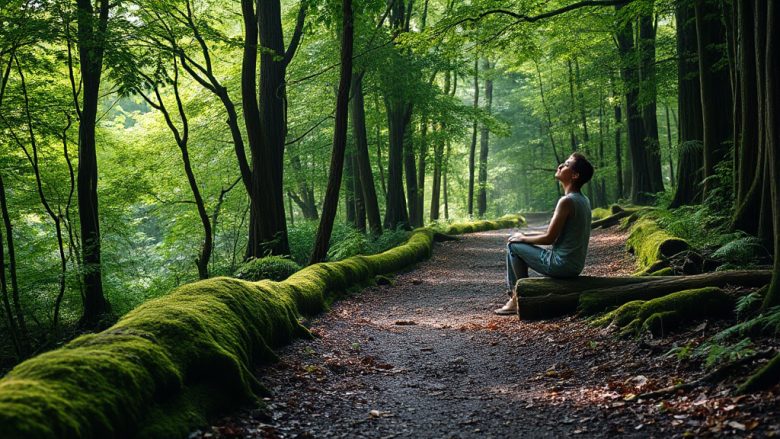
Forest bathing is not a walk with a nicer name. That’s the first thing to understand if you want to know how to improve your forest bathing. The point isn’t to cover ground or reach a viewpoint; it’s to slow down until your senses take over from your to-do list. And that takes deliberate pacing. Most people who try it for the first time come back feeling like they just went for a stroll. That’s fine, but it’s not the full experience. The difference between a nice walk in the woods and genuine forest bathing comes down to how you pace yourself, what you pay attention to, and how willing you are to let the forest set the rhythm instead of your legs.
This isn’t about mysticism or pretending you’re a woodland creature. It’s about practical adjustments that turn a pleasant amble into something that actually resets your nervous system. Whether you’ve done a guided session once and want to keep going alone, or you’ve read about it and felt skeptical, these practices will help you get more from the time you spend among trees.
What Forest Bathing Actually Is (and Why It’s Not a Hike)
The term comes from the Japanese practice of shinrin-yoku, which translates roughly as “forest bathing” or “taking in the forest atmosphere.” The idea is simple: you immerse yourself in a woodland environment and let your senses absorb it. There’s no destination, no calorie target, no summit to conquer. The forest is the point, not the backdrop.
A hike has a goal. You’re going somewhere, and the walking is the means to get there. Forest bathing flips that. The walking is incidental. You might cover half a mile in two hours, or you might sit on a log for forty minutes and call it a success. The measure isn’t distance; it’s attention.
This distinction matters because most of us are conditioned to move efficiently. When we enter a forest, the default mode is to stride, to check the time, to wonder how far the loop is. Breaking that habit is the first real skill. It helps to choose a small area, maybe a quarter-mile stretch of trail or even a single clearing, and decide in advance that you won’t leave it until you’ve genuinely slowed down. That constraint forces you to stop treating the woods as a treadmill.
Another thing that separates forest bathing from a regular walk is the role of the senses. On a hike, you might notice a nice view or a bird call, but your attention is mostly on footing and progress. In forest bathing, you deliberately tune into smell, sound, touch, and even taste. You’re not just passing through; you’re sampling.
Deepening the Practice: From Simple to Immersive
Once you’ve accepted that the goal is presence rather than distance, you can start layering in practices that deepen the experience. These are ordered from easiest to most immersive, so you can start where you’re comfortable and build from there.
Start with a Sensory Check-In
Before you take your first step, stand still for two or three minutes. Close your eyes if you feel safe doing so, or just soften your gaze. Then run through your senses one at a time. What can you smell? Wet earth, pine resin, decaying leaves, maybe a faint sweetness from something blooming. What can you hear? Wind moving through different layers of canopy, a woodpecker, distant traffic you can’t do anything about. What can you feel? The temperature on your skin, the give of the ground under your shoes, the texture of bark if you reach out.
This check-in does two things. It signals to your brain that this isn’t a normal walk, and it gives you a baseline. By the time you start moving, your senses are already switched on. Without this step, it’s easy to spend the first twenty minutes mentally replaying a conversation from work.
Walk at the Speed of Your Breath
Here’s a practical pacing trick: match your steps to your breath. Take four or five steps per inhale, then four or five per exhale. You’ll immediately notice how much slower that is than your natural walking pace. The point isn’t to count forever; it’s to use the breath as a metronome that keeps you from speeding up unconsciously.
If that feels too mechanical, try a simpler version. Walk until you feel the urge to check your phone or look at your watch. Then stop. Stand still until the urge passes. Then walk again. You’ll be surprised how often the urge comes, and how quickly it fades when you don’t act on it. Each time it fades, you’ve bought yourself another stretch of genuine attention.
Choose a Sit Spot and Stay There
This is where forest bathing gets serious. Find a place that feels comfortable, a fallen log, a flat rock, a patch of dry ground against a tree. Sit down. Stay for at least twenty minutes. Longer is better, but twenty is enough to get past the initial restlessness.
The first five minutes are usually boring. Your mind will complain. You’ll notice every twig poking you. You’ll wonder if you’re doing it right. That’s normal. The interesting part starts around minute ten, when the forest stops being a backdrop and starts being a place you’re actually in. Birds resume their activity. Squirrels forget you’re there. Small movements in the leaf litter become visible. You start to notice things you’d never see while walking.
If you can, return to the same sit spot repeatedly over weeks or months. You’ll begin to notice seasonal changes, individual animals, the way light shifts through the day. This kind of familiarity is where forest bathing becomes something more than a one-off relaxation exercise.
Engage with the Forest Through Touch and Sound
Once you’re comfortable sitting still, you can add more active sensory engagement. Run your fingers along different tree barks. Some are rough and fissured, some smooth and cool, some flaky and papery. Press your palm against a trunk and hold it there for a full minute. Notice the temperature, the texture, the faint sense of something alive and vertical.
Sound works similarly. Instead of just listening passively, try to isolate individual sounds. Pick one bird call and follow it until it stops. Listen for the difference between wind in pine needles and wind in broad leaves. Cup your hands behind your ears to amplify sound, a trick that makes the forest feel suddenly closer and more detailed.
You can also try a guided audio prompt if you’re alone and want structure. There are recordings designed for forest bathing that lead you through sensory exercises. But don’t rely on them forever. The goal is to internalize the prompts so you can do it without headphones.
Extend the Session with a Slow Return
The end of a forest bathing session is as important as the beginning. Don’t just stand up and march back to the car. Take five minutes to transition. Thank the place, if that feels natural. Notice how your body feels compared to when you arrived. Is your breathing slower? Are your shoulders lower? Then walk back at the same deliberate pace you used on the way in. The return trip is often when the deepest sense of calm settles in, because you’re not trying to achieve anything anymore.
Common Mistakes That Undermine the Experience
Even people who understand the concept often sabotage themselves without realizing it. Here are the most common traps.
Bringing a podcast or music. This is the big one. Forest bathing is about receiving the forest’s sensory input, not replacing it with your own. If you need sound to relax, you’re not forest bathing; you’re walking with headphones in a green setting. Leave them at home.
Treating it as a workout. If you’re sweating and checking your heart rate, you’ve missed the point. Save the cardio for another day. Forest bathing should feel almost lazy by normal standards.
Expecting immediate results. Some sessions feel profound. Others feel like you just sat on a log for half an hour. That’s fine. The benefits accumulate over time, not in a single outing. Don’t judge a session by how blissed-out you felt.
Choosing a spot with too much distraction. A busy park with dogs and cyclists is better than nothing, but it’s not ideal. Find somewhere quieter if you can. Even a small patch of woods with minimal foot traffic will serve you better than a popular trail.
Forgetting to turn off your phone. Not just silent, but off. Even a silent phone in your pocket creates a low-level awareness that you’re reachable. Turning it off removes that thread entirely.
Making It a Regular Practice
The real benefits of forest bathing come from repetition. A single session is nice. A weekly practice changes how you handle stress. But regularity is hard when life is busy and the woods are a drive away.
The solution is to lower your standards for what counts. A twenty-minute sit in a local park with a few trees is better than waiting for the perfect free afternoon to visit a proper forest. You can also practice micro-sessions: five minutes of sensory check-in before you get in your car, or a slow walk around your garden paying attention to smell and sound. These aren’t the full experience, but they keep the muscle warm.
Schedule it like any other appointment. Put it in your calendar. Tell someone you’re doing it so you feel accountable. Go at the same time each week if possible, because routine reduces the friction of getting out the door. And don’t be rigid about the location. The same sit spot is ideal, but a new trail is better than no trail.
Over time, you’ll notice that the skills you build in the forest start to leak into the rest of your life. You’ll catch yourself breathing more slowly in traffic. You’ll notice the smell of rain on pavement. You’ll find it easier to stand still without reaching for your phone. That’s the real payoff. Forest bathing isn’t an escape from daily life; it’s a training ground for paying attention.
Frequently Asked Questions
How long should a forest bathing session last?
Anywhere from twenty minutes to two hours is reasonable. The key is to go slow enough that you’re not just walking. If you only have twenty minutes, spend most of it sitting still rather than moving. Longer sessions allow for a deeper shift in attention, but consistency matters more than duration.
Can I do forest bathing alone?
Yes, and many people prefer it. Being alone removes social pressure and makes it easier to sink into the sensory experience. Just take basic safety precautions: tell someone where you’re going, stay on marked trails if you’re unfamiliar with the area, and keep your phone off but accessible in case of emergency.
What if I don’t have access to a real forest?
Work with what you have. A park with mature trees, a canal path lined with willows, even a quiet garden can support a modified version of the practice. The principles are the same: slow down, engage your senses, sit still. A smaller green space won’t offer the same depth, but it’s far better than nothing.
Is forest bathing the same as meditation?
They overlap, but they’re not identical. Meditation typically involves turning attention inward, often by focusing on the breath or a mantra. Forest bathing turns attention outward, toward the sensory world of the forest. You can combine them, but the emphasis in forest bathing is on receiving what’s around you rather than cultivating a specific mental state.