The cheapest changes in a home are rarely the biggest ones. They’re the ones that fix an obvious annoyance — the door that sticks, the corner that’s always dark, the border that looks like nobody lives there. If you’re searching for home and garden ideas on a budget, start by walking through your own space and writing down what you notice every single day. That list is your shopping list. Everything below is ranked by cost per unit of impact, so you can pick a weekend project that fits both your wallet and your patience.
1. Fix the daily annoyance first — indoor and out
Nothing improves a home’s feel faster than removing a small, constant friction. Indoors, that might be a squeaky hinge, a wobbly toilet seat, or a cupboard door that never quite closes. A tube of silicone lubricant, a screwdriver and twenty minutes will sort most of these. Outdoors, it’s usually a gate that scrapes, a loose paving slab, or a tap that drips. These jobs cost almost nothing — often under £10 — and the payoff is disproportionate because you stop noticing the problem, which means you stop noticing the house as a to-do list.
Effort level: low. The detail that makes it look deliberate: finish the job properly. Tighten everything, wipe down the fix, and step back. A repaired thing looks cared for; a half-fixed thing looks abandoned.
2. Light: the highest-return cheap upgrade in any room
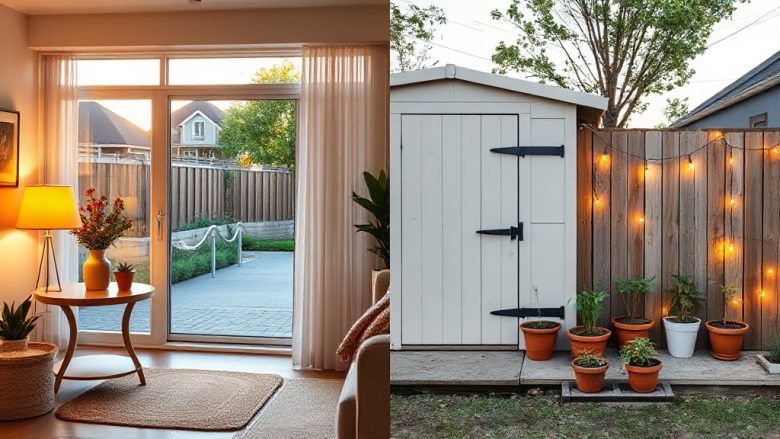
If you only do one thing indoors, change your lighting. Not the fittings — the bulbs and the placement. Swap harsh cool-white bulbs for warm white (2700K) in living spaces and watch the room soften. Add a second light source at low level, like a small table lamp on a bookshelf or a clip-on reading light, and suddenly the room has depth instead of a single glaring ceiling fixture. Total cost: £15–£40 depending on what you already own.
Outdoors, the same principle applies. A string of warm solar fairy lights along a fence or through a shrub costs £10–£20 and transforms how the garden reads after dark. You don’t need a full lighting scheme. You need one warm pool of light where you actually sit. Effort level: very low. Detail that sells it: hide the cable or the solar panel behind a pot or a plant, so the light seems to come from nowhere.
3. Paint one thing, not everything
Repainting a whole room is a weekend and a mess. Repainting one thing is an afternoon. Indoors, the highest-impact single surface is usually a front door from the inside, a radiator, or a single wall behind a bed or sofa. A tester pot plus a small tin of durable paint can be under £25. Choose a colour that already exists in the room — a cushion, a rug, a piece of art — so it looks intentional rather than random.
Outdoors, the same logic applies to a fence panel, a shed door, or a single garden chair. One fresh colour against tired timber makes the whole garden look maintained. Cost: £12–£30 for a small tin and a brush. Effort: medium, mostly drying time. The deliberate detail: paint the edge or the back of the object too, not just the face you see. It’s the difference between a touch-up and a proper job.
4. Soften hard edges with textiles and plants
Bare floors, bare windows and bare walls make a home feel unfinished, even when it’s clean. You don’t need new furniture. You need texture. A second-hand wool blanket over the arm of a sofa, a runner on a hallway floor, or a cheap linen curtain hung high and wide will do more than a new sideboard. Budget: £10–£35 if you shop charity shops and online marketplaces.
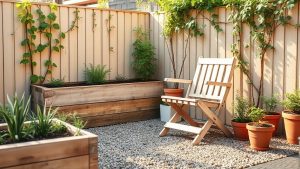
In the garden, the equivalent move is filling a bare edge with plants. Not a full border — just three or four pots of something leafy and forgiving, grouped together. A cluster of pots reads as a designed feature; a single pot reads as an afterthought. Use whatever’s on offer at the garden centre in late season. Cost: £15–£40 including compost. Effort: low. The detail that makes it look deliberate: group pots in odd numbers and vary the heights, with the tallest at the back.
5. Storage that hides the mess you already own
Most homes don’t need more space. They need fewer visible things. A cheap basket, a lidded box, or a simple shelf with a fabric cover can absorb the clutter that makes a room feel tense. Indoors, look at the surfaces you see when you walk in — hall table, kitchen worktop, coffee table. Clear each one completely, then put back only what you actually use daily. A set of matching baskets underneath costs £15–£30 and does the rest.
Outdoors, the clutter is usually tools, toys, or bins. A simple wooden screen or a row of tall pots can hide a bin store or a messy corner for under £40. Effort: low to medium. The deliberate detail: choose one material and repeat it. All wicker, or all dark metal, or all terracotta. Repetition is what makes cheap storage look like a scheme rather than a pile of boxes.
6. Grow something you can eat or cut
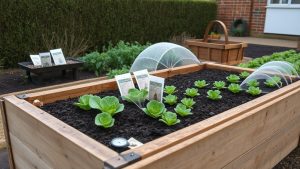
The most satisfying budget garden project is also the cheapest: grow something. A packet of salad seeds, a bag of compost and a few pots will give you cut-and-come-again leaves for months for under £10. Herbs on a kitchen windowsill cost the same and save you buying sad supermarket bunches every week. If you have a small patch of ground, a row of hardy annuals — calendula, cornflower, nigella — will give you cut flowers from a £3 seed packet.
Indoors, the equivalent is a single houseplant that actually suits your light. A pothos or a spider plant in a north-facing room will thrive where a succulent would sulk. Cost: £5–£15. Effort: low, but consistent. The deliberate detail: put the plant in a proper pot that fits the room, not the plastic nursery pot it came in. A £4 pot makes a £6 plant look like a £30 one.
How to choose your weekend project
If you have an hour and under £15, fix an annoyance or change a bulb. If you have an afternoon and £25, paint one surface or group some pots. If you have a full weekend and £50, combine two or three of the ideas above — a painted shed door, a string of lights, and a cluster of herbs will change how your garden feels more than any single expensive purchase.
The trick with home and garden ideas on a budget isn’t finding secret cheap tricks. It’s sequencing. Do the smallest, most visible fix first, because it gives you momentum. Then let each project make the next one easier — the cleared surface makes the room feel bigger, the warm bulb makes the paint colour look better, the grouped pots make the bare fence less obvious. None of it requires a renovation. All of it requires noticing what you already have and giving it ten percent more care than it had yesterday. Start with the thing you see every morning. You’ll be surprised how far £20 and a free afternoon will take you.